
Moray Place
This article grew out of an investigation of two early residents of 9 Moray Place, both of whom were file-cutters, and who appeared to be linked in some way. Read on to find out how.
The history of file-making
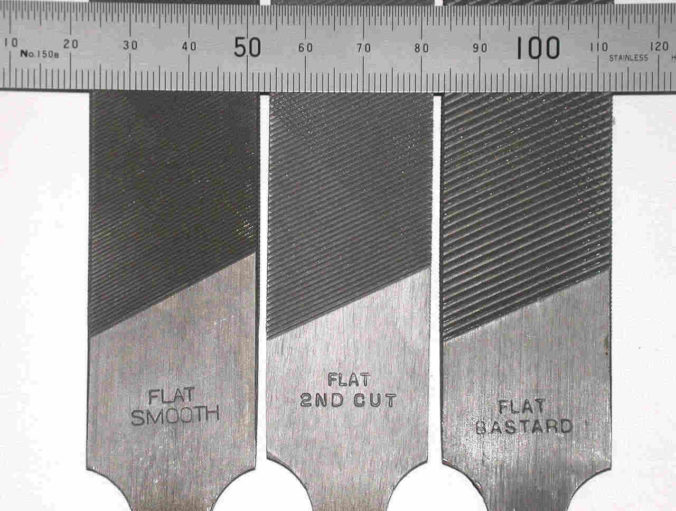
The file is an ancient tool with a crucial role in the development of industry. It is a piece of hardened steel with many small sharp teeth cut into its surfaces which can cut into, smooth, sharpen and shape any material.
Before the introduction of precision engineering of machine parts, files were important in putting together the mechanisms or working parts in items from watches to heavy engineering machinery. Component parts were roughly shaped by forging or casting, machined to an approximate size, then carefully filed to fit one another perfectly. Thus files were used by engineers and in all the metalworking trades; cutlers, silversmiths, clock and watchmakers, etc. There was also a large market for files for sharpening saw teeth. A type of file called a rasp was used in trades working with softer natural materials like wood, horn, marble and bone. Files were thus essential for the manufacture of most other items in factories, and were often one of the major tool costs in manufacturing. Worn files were often regrinded and re-cut to prolong their life .
Sheffield rules
In the UK, the centre of file-making was undoubtedly Sheffield. From 1624 the Cutler’s Company included file-making amongst the practices it covered, and exerted strict controls over the business, managing the apprenticeships and appointing Freemen. But when the Company’s control over the trades finally ended in 1814, the unions took its place, and worked hard to insist that any man in the trade must be a member of the union. Intimidation was common. In 1857, a saw grinder, James Lindley, was accused of taking on too many apprentices, and was followed for weeks and then shot and killed. Others were bombed out of their homes.


Recent Comments