Author: Andrew Downie (page 1 of 32)

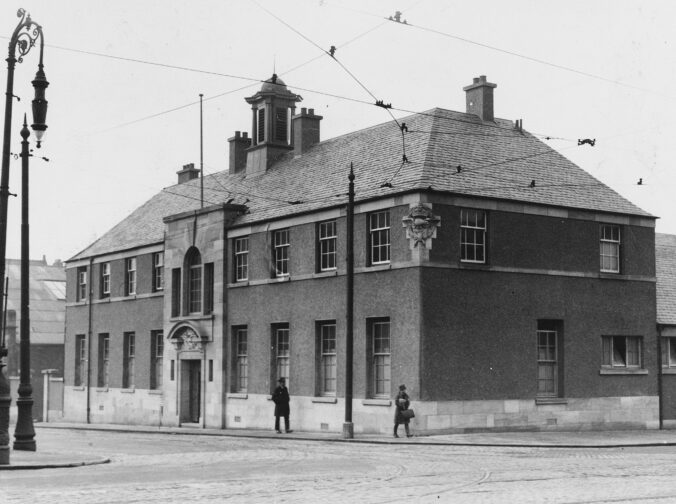
602 City of Glasgow Auxilliary Air Force Squadron HQ

I don’t recall the above building before its demolition c 2002, but it sat prominently at the corner of Coplaw Street and Victoria Road, and was tied up with Glasgow’s military history.

The famous 602 Squadron

602 AuxAF Squadron was founded on 12 September 1925, the first unit of the newly created Auxiliary Air Force. The unit was based at Renfrew airstrip, where the runway nows forms part of the M8 beyond Hillington. Initially intended as a light bomber squadron, its pilots initially achieved fame with the first flight over Mount Everest in 1933. Squadron leader the Marquis of Clydesdale (later 13th Duke of Hamilton) and Flt Lt David McIntyre flew two Westland biplanes with observers and film cameras, passing 100 feet over the summit. They were forbidden to repeat the flight due to difficulties with their oxygen supplies, but on finding the photographs spoiled by dust, they did it again anyway, producing the first detailed aerial mapping of Everest . The documentary Wings over Everest (1934) won an Oscar. You can watch it online.
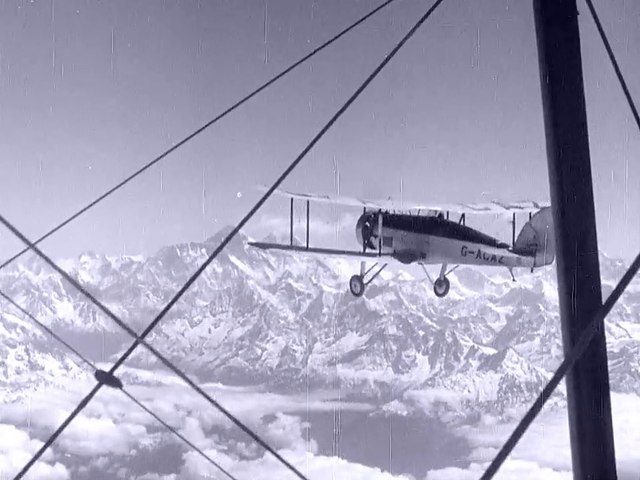
Period photo of biplane approaching snow covered mountain peaks, taken through the struts of the second plane

602 Squadron flyers approaching the summit of Everest.

While the flying took place at Renfrew, the squadron also needed a headquarters, and so the site was selected adjacent to the home of the 7th Cameronians (Scottish Rifles), the old Third Lanark Drill Hall on Coplaw Street, where Strathbungo merges into Govanhill.

The headquarters building was opened by King George V on 12 July 1927.
Continue reading
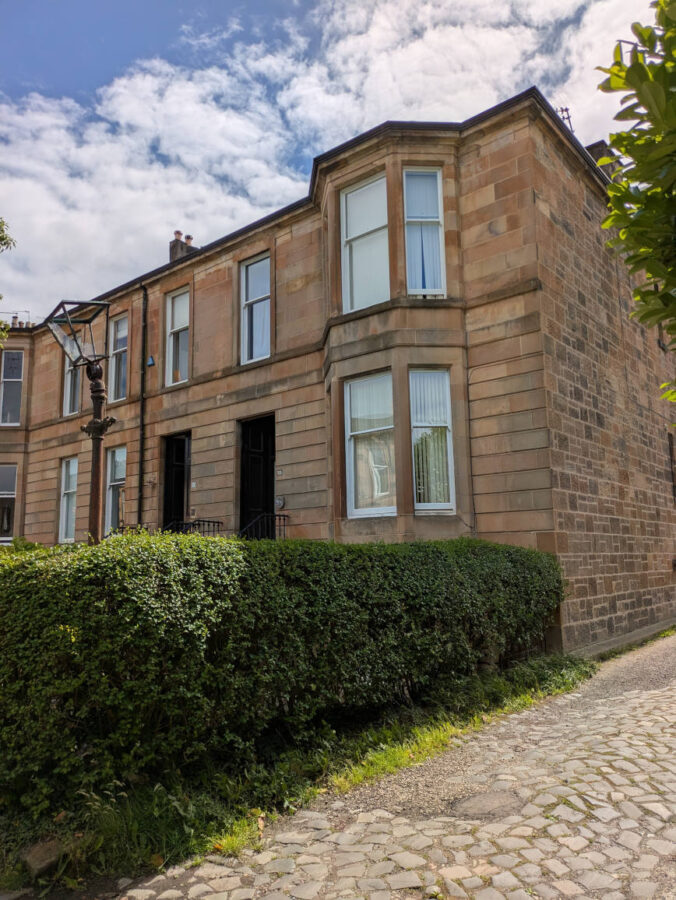
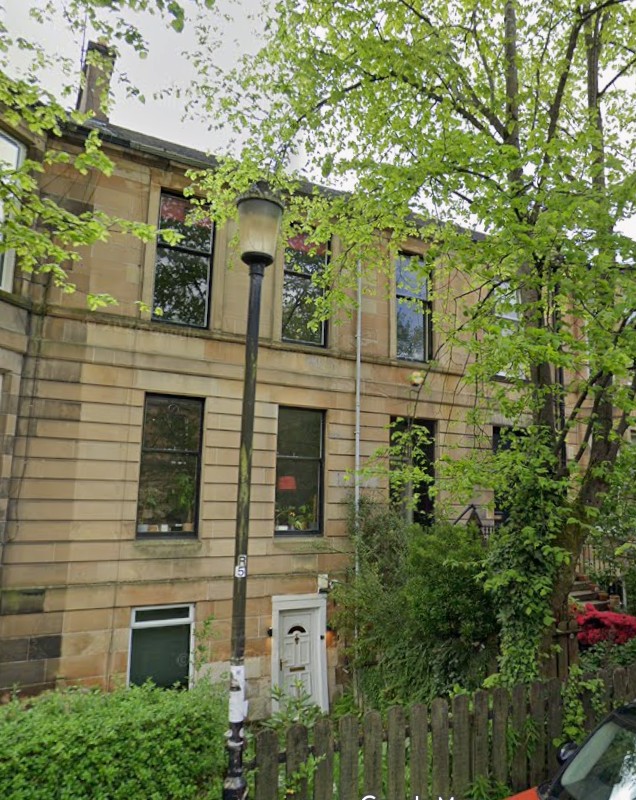
55 Marywood Square

The story of 55 Marywood Square, formerly 25 Princes Square, and its previous occupants.

James Robertson

The long terrace on the south side of Marywood Square was built c.1884-5 and in the 1885 valuation roll the entire terrace was listed as belonging to James Robertson, a mason and builder living in Pollokshields. He first advertised the houses for sale or let in the spring/summer of 1884. Yet in 1891 he went bankrupt, he died in 1893, and by 1895 the valuation roll notes the entire terrace was back in the ownership of William Stevenson, the quarrymaster and original developer of Strathbungo.

Ownership

William Stevenson passed 25 Princes Square on to his youngest daughter, Elizabeth, who also inherited Nos 26 & 27 (now 53 and 51 Marywood Square). She sold the house some time after 1915.

Elizabeth married the architect James Laird and they had a daughter Dorothy. She died in 1945. Her daughter was quite a character, taking a passage on a Finnish sailing ship, the Penang, but ending up becoming an able seaman and sailing round the world with her. She wrote many articles and books, including the first biographies of Queen Elizabeth II and of the Queen Mother, and as a correspondent for The Herald, Scottish Field and the horse racing papers. Her Herald obituary in 2000 described her mother Elizabeth as a disabled painter .

Robert Murdoch

Robert McDonald Murdoch was the first tenant in the property, from 1885 to 1890. He was himself a mason and builder.

He was born in Glasgow in 1844, the fourth of ten boys of Thomas Murdoch and Mary Lang. The couple had two daughters also. Thomas was a monumental sculptor, a partner in the firm of Connell & Murdoch in the Gorbals. After the firm closed, Murdoch continued in business as a mason and builder as T Murdoch & Son until his death in 1865, and thereafter the business was managed by his son Robert, who in 1871 renamed the firm as R Murdoch, Masons and Builders, at Clyde Terrace.

Continue reading

21 Marywood Square

This is the story of the occupants of 21 Marywood Square, formerly 42 Princes Square.

James Robertson

The long terrace on the south side of Marywood Square was built c.1884-5 and in the 1885 valuation roll the entire terrace was listed as belonging to James Robertson, a mason and builder living in Pollokshields. He first advertised the houses for sale or let in the spring/summer of 1884. Yet in 1891 he went bankrupt , he died in 1893, and by 1895 the valuation roll notes the entire terrace was back in the ownership of William Stevenson, the quarrymaster and original developer of Strathbungo.

John & Elizabeth Anderson

John’s grandfather was a bookseller in Dumfries. His father Robert Wright Anderson took up printing and moved to Glasgow to work as a foreman with the Glasgow Herald before striking out in business on his own as a letterpress printer . His uncle Sir James Anderson also began training in printing, but jacked it in to go to sea. He achieved fame as the Captain of the SS Great Eastern who oversaw the laying of the first successful transatlantic telegraph cables in 1865-6 .

Caricature of plulp gent holding a banner "Bathing Fintry Bay" reflecting his love of Cumbrae

The Bailie caricature of Robert Anderson, letterpress printer. Source: TheGlasgowStory

Continue reading

« Older posts

© 2026 Bygone Bungo

Theme by Anders NorĂ©nUp ↑