Category: People (page 2 of 12)

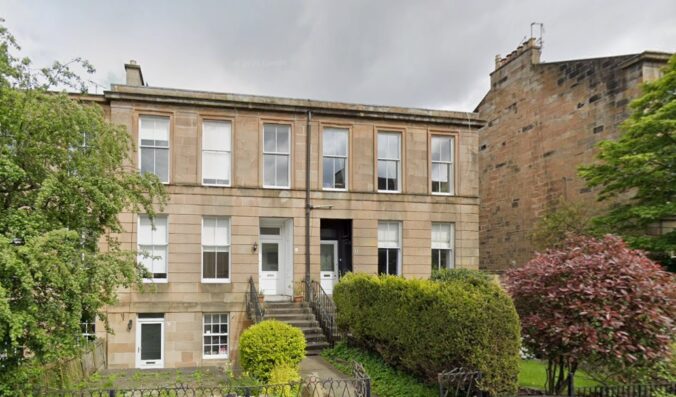
6 Queen Square

No 6 Queen Square was built around 1865-6 by Daniel McNicol, and was originally No 2, being renumbered to 6 around 1929. Note how 1 & 2 (now 4 & 6), being the end pair in the terrace, protrude very slightly forwards of the rest, a discreet end pavillion to break up the frontage. It occurs at the other end as well. Yet it is so subtle very few ever notice it.

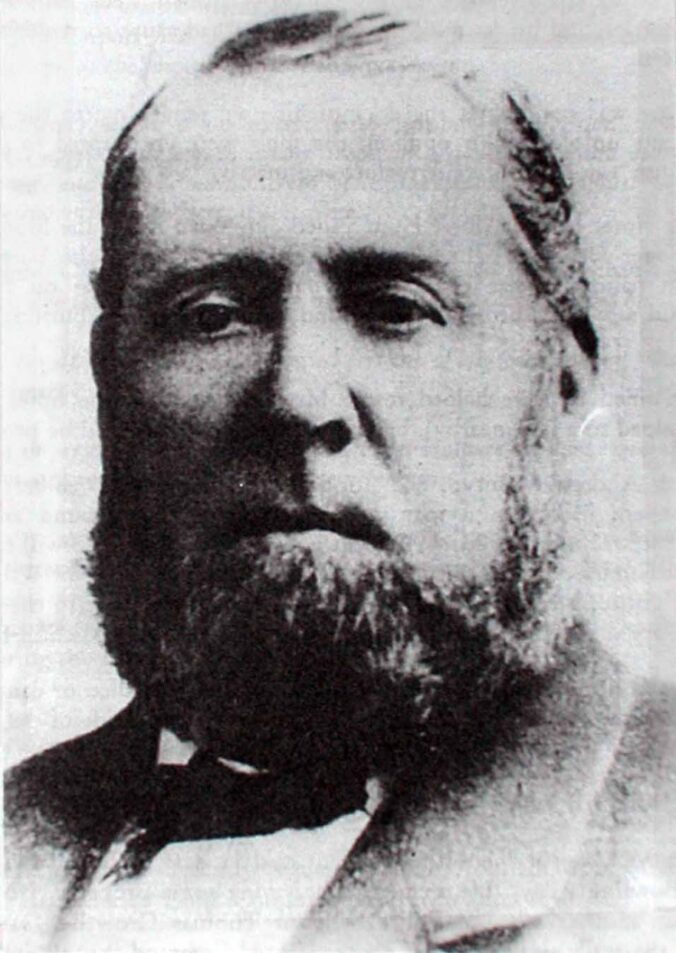
Rev William Rossborough

The Rev Rossborough was the first occupant of the house, renting from Daniel McNicol from 1866 to 1873. He was born in Ballymena in 1813. His father was an elder in the Presbyterian church at Culleybackey, Co. Antrim. William also became a minister, at the 1st Presbyterian Church at Rathfriland, County Down, from 1837. In 1842 he married Margaret McAlester of Belfast, but she died in January 1847, and his father died the following day. In December 1848 he married again, to Magaret Allan, and had six further children, four of whom survived to adulthood.

In 1858 he gave up his ministry after twenty-one years and, partly with a view to the education of his children, accepted a call from East Campbell Street Free Church, Glasgow. A deputation had come from Glasgow to hear him and some other Irish ministers. In 1881, after twenty three years in Glasgow without missing a day from his work, he retired, first to Kirn, Dunoon, then in 1885 back to Belfast, where he died in 1892.
Continue reading

57 Marywood Square, the former 26 Moray Place

This is the story of 57 Marywoood Square, formerly known as 26 Moray Place, and – briefly – as 57 Princes Square. The residence is the end building of the fourth Moray Place terrace, but its porch opens onto Marywood Square. Unusually, it was designed by Francis Armstrong, an architect from Dumfrieshire who had little involvement in Glasgow, but who purchased the land for development in 1876. He retained ownership of 28 Moray Place upon completion.

Blond stone terrace with large projecting bay at each end, the nearest being no 57.

View of 57 Marywood Square/26 Moray Place from Moray Place, with the rest of the terrace beyond.

William Fullarton Murray

William Fullarton Murray was the third William in succession in the Murray family, and the first occupant of 26 Moray Place.

The elder William Murray was a stationer in Paisley. His son, who styled himself William Murray Jnr, was born in Paisley in 1806. He married Agnes Fullarton and had eleven children, of whom William Fullarton Murray was the eldest son.

He was born in Glasgow in 1837, and married Elizabeth Rodger in 1869. She was a widow, with a daughter Agnes, and they had a further son William in 1871. Around 1878, on completion of the new terrace, the family moved into No 26 Moray Place with the two children.

In 1885 Elizabeth died at home, aged 52, and the following year, aged 49, William married again, to Jane Laidlaw. Jane was a neighbour, the daughter of school teacher John Laidlaw of 1 Princes Square (now 4 Marywood Square), the marriage taking place in her home. Despite his late start, he had four more children with Jane, three born in Moray Place, and the fourth after he had retired to a farm in Kilwinning c.1898, born in 1901.

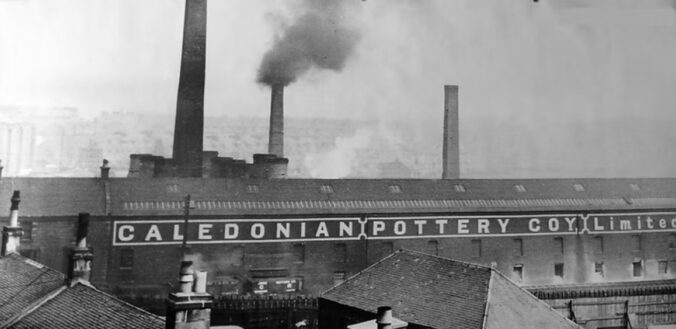
The Murrays were potters, but not just any potters.

Continue reading

Andrew McIntyre, builder – and father of Australian democracy?

I have now identifed and described almost all the builders of Strathbungo’s iconic buildings, but Andrew McIntyre’s fascinating story deserves an account all its own. As it is Australia Day today, 26th January, it seems appropriate to document a Strathbungo man’s role in riot, insurrection and the democracy movement in Australia.

But first the Strathbungo stuff.

Andrew McIntyre was the youngest child of Archibald McIntyre, a mason from Glenorchy. The family moved from Callander to Glasgow around 1825 and Andrew was born there in 1831. He married Margaret Kerr from Beith in the Gorbals in 1850 and moved in with her family at 80 Eglinton Street. They were both 19.

By this point his two brothers John and George, who were several years older, were already establishing themselves in their father’s trade as masons, and would go on to become brickmakers and builders. John McIntyre, the eldest, would partner with the quarry master William Stevenson and architect Alexander “Greek” Thomson to build Queens Park Terrace, and then purchase and develop Strathbungo, building 1-10 Moray Place, and possibly 11-18 also.

Continue reading

« Older posts Newer posts »

© 2026 Bygone Bungo

Theme by Anders NorĂ©nUp ↑