
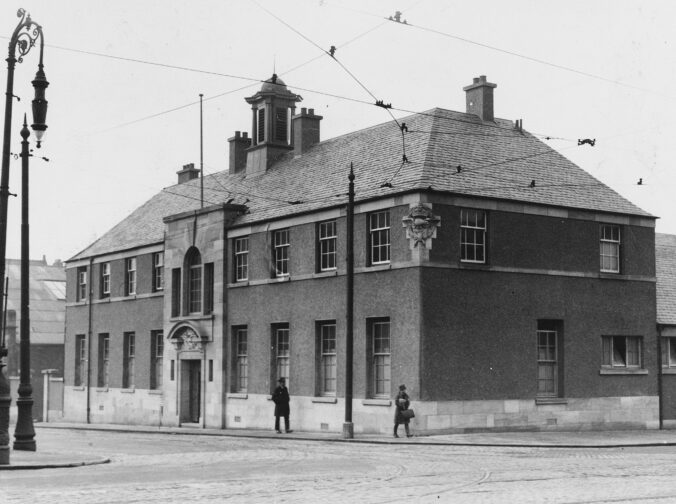
I don’t recall the above building before its demolition c 2002, but it sat prominently at the corner of Coplaw Street and Victoria Road, and was tied up with Glasgow’s military history.
The famous 602 Squadron
602 AuxAF Squadron was founded on 12 September 1925, the first unit of the newly created Auxiliary Air Force. The unit was based at Renfrew airstrip, where the runway nows forms part of the M8 beyond Hillington. Initially intended as a light bomber squadron, its pilots initially achieved fame with the first flight over Mount Everest in 1933. Squadron leader the Marquis of Clydesdale (later 13th Duke of Hamilton) and Flt Lt David McIntyre flew two Westland biplanes with observers and film cameras, passing 100 feet over the summit. They were forbidden to repeat the flight due to difficulties with their oxygen supplies, but on finding the photographs spoiled by dust, they did it again anyway, producing the first detailed aerial mapping of Everest . The documentary Wings over Everest (1934) won an Oscar. You can watch it online.
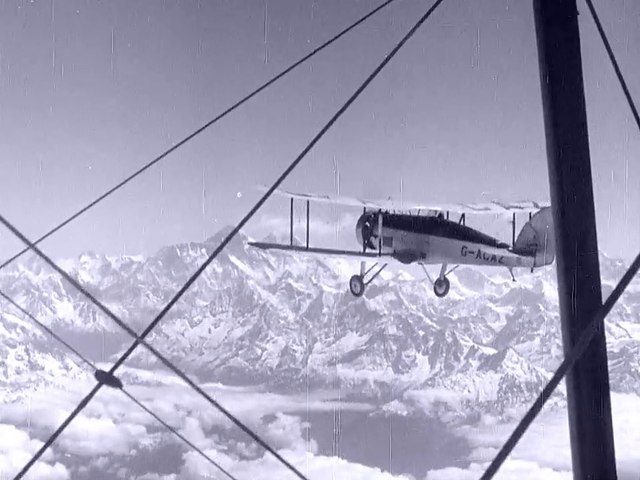
602 Squadron flyers approaching the summit of Everest.
While the flying took place at Renfrew, the squadron also needed a headquarters, and so the site was selected adjacent to the home of the 7th Cameronians (Scottish Rifles), the old Third Lanark Drill Hall on Coplaw Street, where Strathbungo merges into Govanhill.
The headquarters building was opened by King George V on 12 July 1927.
As the Second World War approached, the squadron switched to the Mk 1 Spitfire, and achieved further fame with the first aerial action over Britain. On the morning of 16th October, the Luftwaffe sent out a reconnaissance patrol looking for HMS Hood in the Firth of Forth. 602 pilot George Pinkerton fired the first shots of the war over the skies of Great Britain by intercepting an enemy Heinkel 111 and chasing it out to sea, where it escaped.
In the afternoon the Germans returned and attacked the naval ships in the Firth of Forth.
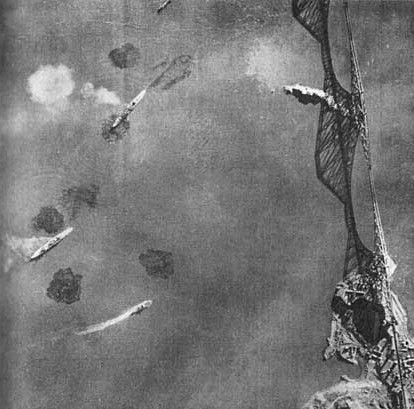
German aerial photograph of the attack on HMS Southampton. Edinburgh and Mohawk.
Pinkerton, aided by Archie McKellar (also 602), attacked Helmut Pohle’s Ju88 and brought it down into the sea off Crail, just as Pat Gifford of 603 City of Edinburgh shot down another. These were the first air victories over Britain. There is a good account of the raid on Andy Arthur’s Threadinburgh blog .
Pohle was the only survivor from his aircraft when it ditched, and he was picked up by a fishing boat. He had broken his jaw in the crash, and so when Pinkerton paid him a visit in hospital a few days later, he gifted him a box of toffees. Nice touch .
Just 12 days later Archie McKellar shot down a Heinkel 111 which crash landed near Humbie, East Lothian, the first to fall on British soil.
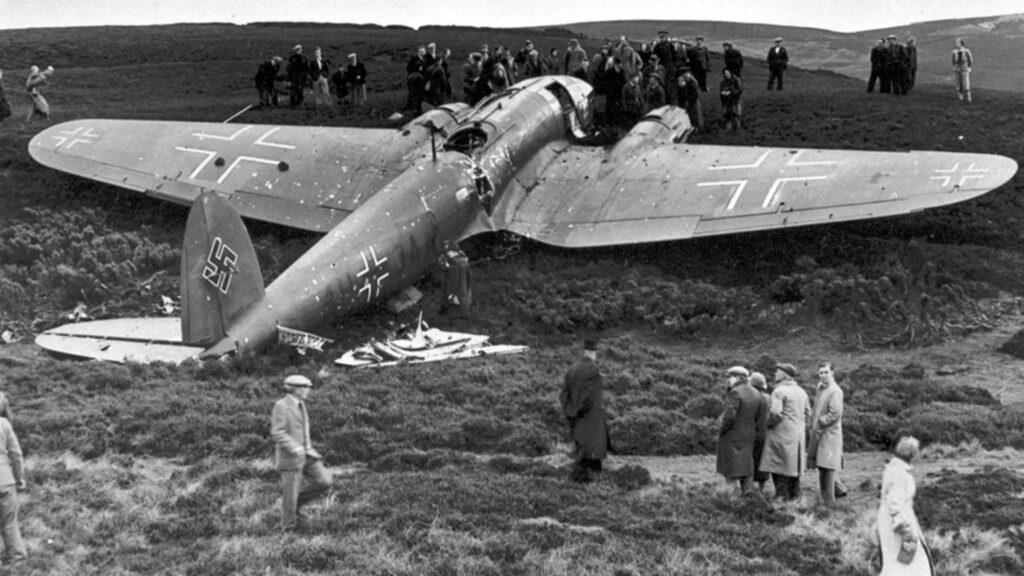
The Humbie Heinkel
In August 1940, 602 Squadron were sent south to join the Battle of Britain. The squadron served longer in the front line than any other Squadron during the Battle of Britain and scored the second highest toll of enemy aircraft .
McKellar, a plasterer from Paisley, went on to claim 21 enemy aircraft, and achieved the rare feat of five claims in one day, all Messerschmitt Bf 109 fighters. He was shot down and killed over Kent on 1 November 1940, aged 28. He is remembered at Eastwood Cemetery .
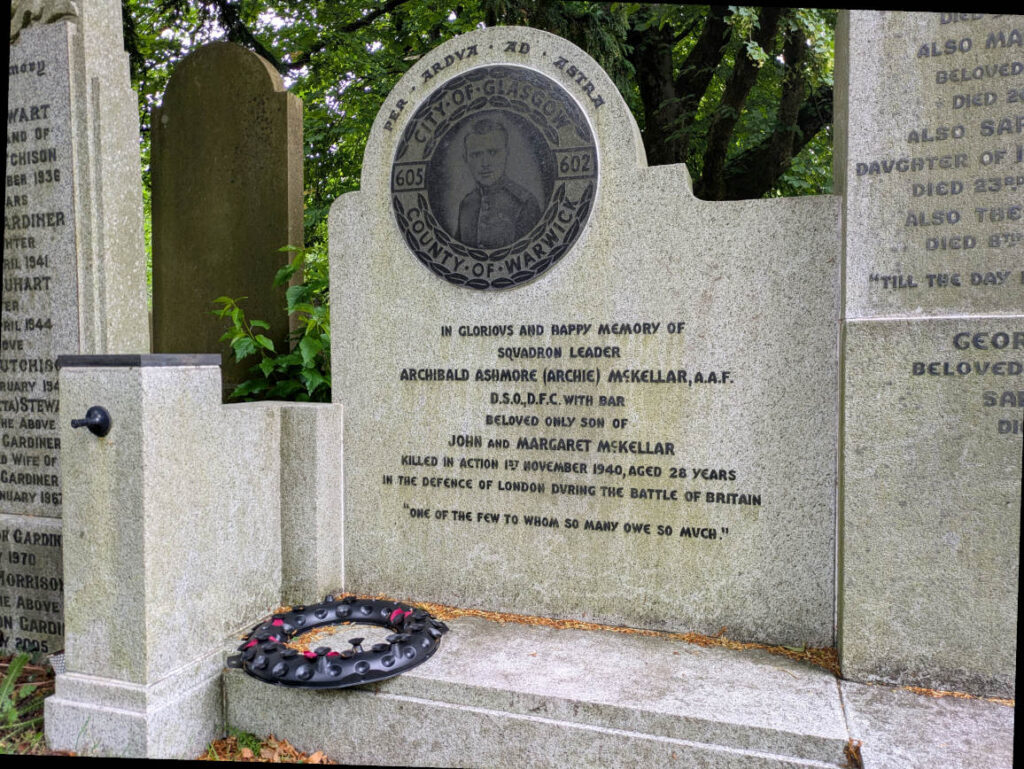
Memorial to Archie McKellar, attached to his family’s larger grave marker at Eastwood Cemetery, Glasgow.
Pinkerton later received an OBE for leading the Merchant Ship Fighter Unit, a bunch of pilots who were catapulted off convoy ships in ageing Hurricanes (“Hurricats”) with no means of landing again. It sounds suicidal, but in eight launches they claimed six German bombers, no doubt much to the surprise of the German aircrew. Somehow they only lost one pilot. He became an Acting Group Captain and survived the war .
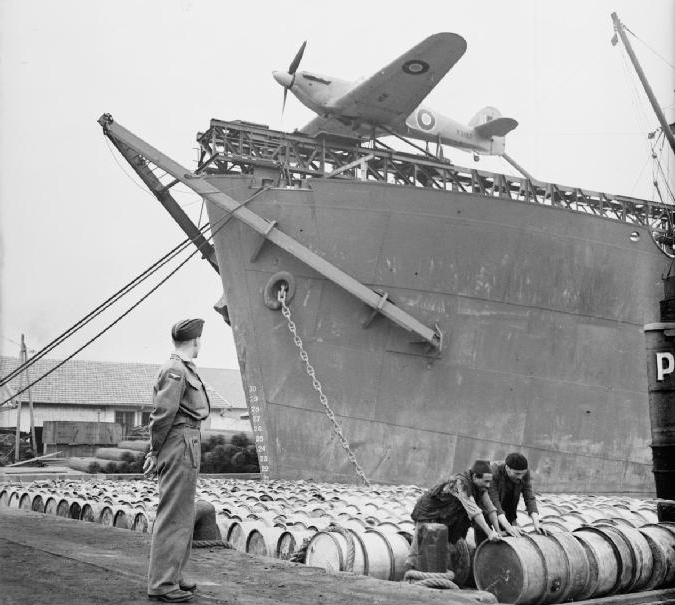
A Hurricane (“Hurricat”) perched precariously on a rocket-powered sled on the bow of a convoy ship, ready to be catapaulted into the air to defend from long-range German air attacks. There was no provision to retrieve the plane, and the pilot had to parachute or ditch and hope to get picked up. Source: Source: Imperial War Museums
The squadron was disbanded in 1957 though I am unsure when the RAF left the building on Coplaw Street.
Later Usage
In 1970 the building became a Jewish Welfare Centre, and the Glasgow Jewish Board of Guardians, renamed The Glasgow Jewish Welfare Board, moved in, and remained until 1996. The building also became home to a well-regarded amateur dramatic society, the Jewish Institute Players, who became the Avrom Greenbaum Players. After many notable successes the group was wound up in 1990 .
The building appears to have been used by City Refrigeration briefly, but around 2002 developers converted the old Third Lanark HQ, took down the drill hall, and removed the adjacent RAF building, to build the modern flats that currently occupy the site .
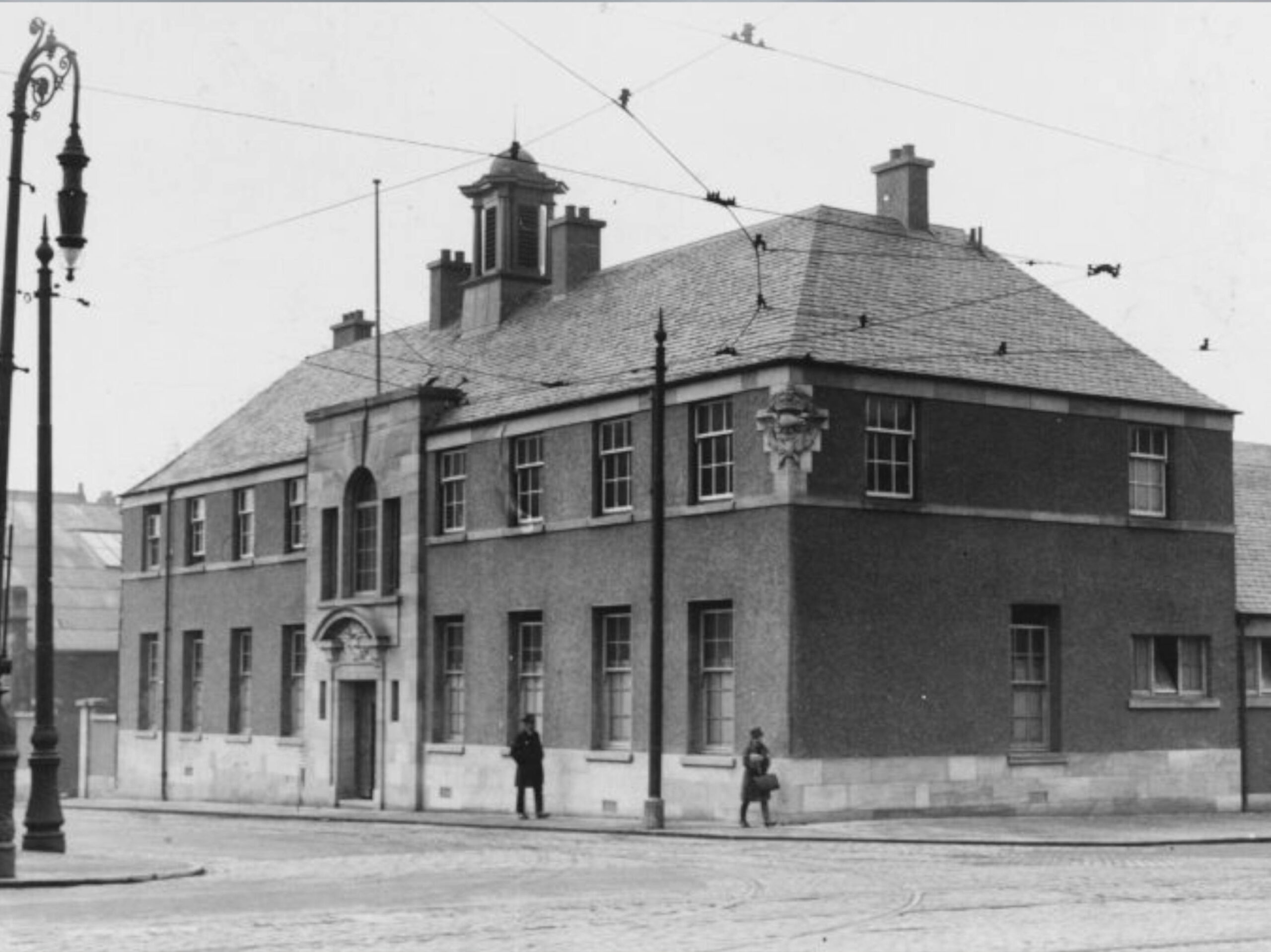
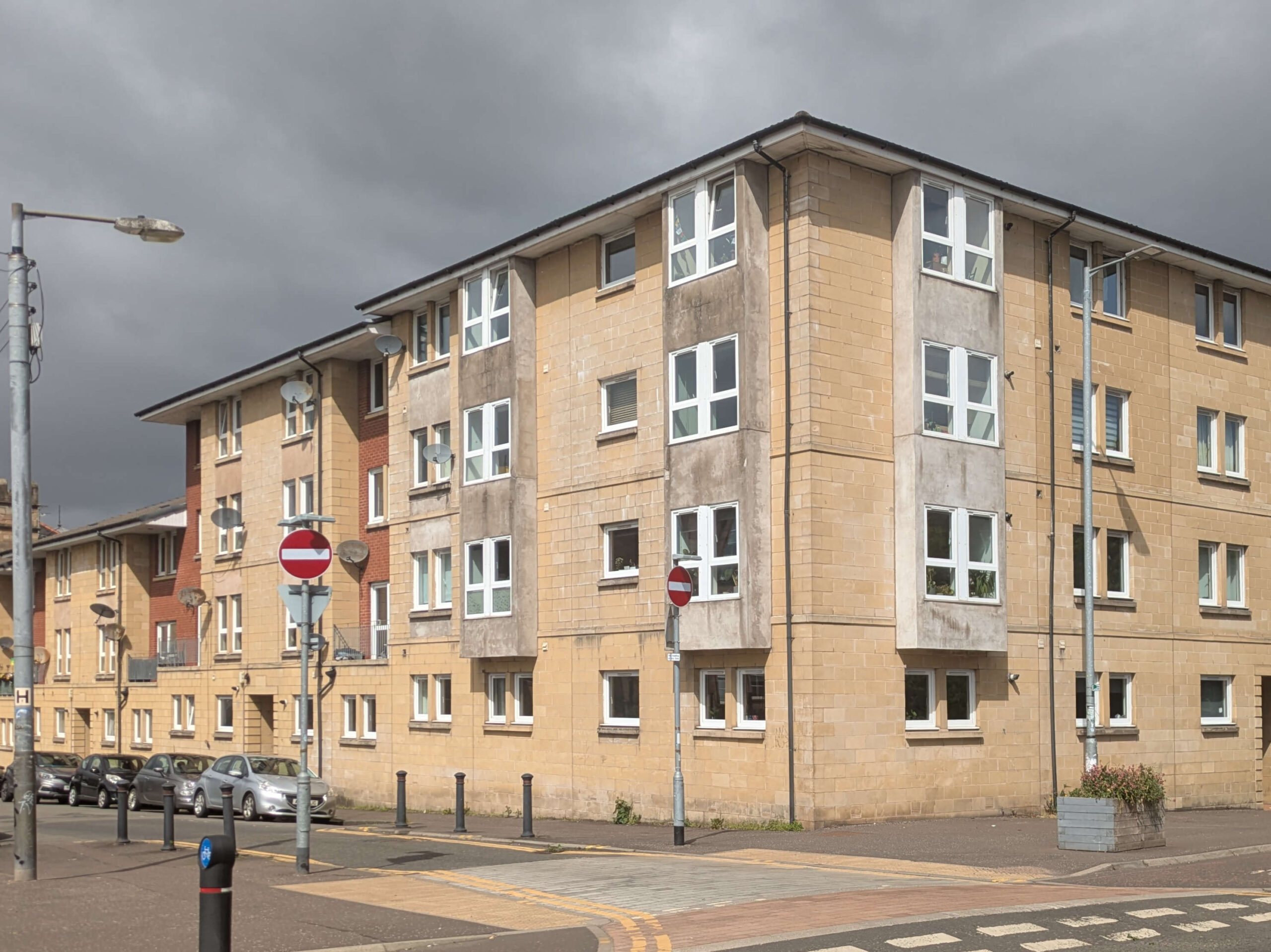
Then & Now shows the HQ of 602 Auxillary Air Force Squadron, Coplaw Street, with current view superimposed. Note the Third Lanark Drill Hall just in picture to the left – I don’t have a proper photo of it prior to demolition. Source: Glasgow Times History & author’s own.
Additions and corrections welcome, as always.
Leave a Reply